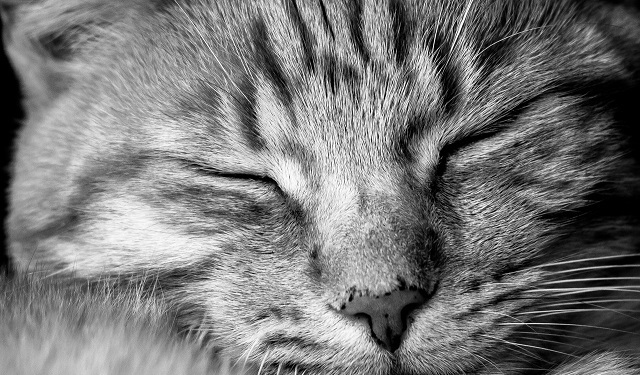
My cats eyes are watering. This is common for my cat Beast. It is pretty much a weekly if not daily occurrence.
I was going to the vet for a checkout though so I had questions to ask. Is it dangerous? Do I need to worry? Is there anything I can do to help? Should I clean them?
In this article we'll look into why cats eyes water and what you can and should to to help.
When your cat's eyes are in good shape and don't have any issues the tears drain into the nose.
This means everything is functioning normally and the tear film, the layer on your cat's eyes, is in good health.
If your cat's eyes are watering though the flow into the nose could be blocked or even overflowing. This may happen for lots of reasons ranging from inflammation to the shape of your cat’s face and anything in between.
There are two primary reasons your cat may have watery eyes:
Something is blocking the normal flow of tears
Something is causing your kitty to produce excessive tears
Although tears are produced on a regular basis to keep your cat's eyes moist, excessive tears are typically caused by inflammation which is the result of an infection or an allergy of some sort.
It is also possible they simply have a hair that is growing into the eye and irritating the heck out of it too.
The other major reasons you might see extra tears in the eyes is because of an injury of some sort.
Cats of course get in fights and just like us humans they can sometimes be clumsy.
Any contact with the eye could cause a scratch or could get something stuck in the eye too.
All it might take is a little bit of dust or even a something else blowing around in the wind if you have an outdoor cat. All of these things can cause irritation in the eye and cause it to water excessively.
There are also several congenital reasons that may cause your cat to have this issue.
These are things like a lack of an eyelid (some domestic short haired cats have this issue at birth) or even a condition called epiphora which makes your cat produce excessive tears their entire life.
If you'd like a much more comprehensive list of the actual diseases and issues that can cause watery eyes please check out this article on wagwalking for a complete breakdown.
Conjunctivitis is by far the most common infection your cat can get that will cause inflamed eyes as well as extra tears to be produced. You'd probably most commonly know it as the dreaded 'pink eye.'
It can cause one or both of your cat’s eyes to look red and swollen, be light-sensitive, and have clear, teary or thick mucus eye discharge.
On the bright side of things this is usually relatively easy to treat with an ointment or drops provided by your vet and your cat should see a swift recovery. This video sounds very robotic, but has some very helpful tips on care:
You should however be aware that if your cat is experiencing the above with a fever as well as diarrhea then your kitty may be in severe danger from feline infectious peritonitis. Get them to an animal hospital as quickly as possible.
The most obvious sign of overly watery eyes in cats is the a brown/reddish staining on the face right below the eyes.
You might see it as black as well depending on the color of your cat's fur and skin. It is usually crusty and relatively easily wiped away.
There are however other things worth considering too. If you don't see the most common symptom, that eye gook / staining, then you'll also want to keep an eye out for:
Squinting: If you notice your kitty squinting a lot they may be trying to squeeze the tears out of their eyes so they can see more clearly.
Red eyes: Red eyes can be caused by the irritation that is likely causing the extra tears to be produced to begin with.
Scratching of the eyes: If your cat is constantly pawing at her eyes and rubbing at the general area then it is often an indication she has watery eyes and is trying to clear them.
Inflammation: If you notice any inflammation it is likely there's an infection of some sort at cause and you'll want to get a vet check up straight away.
Eye discharge: This is typically caused by something more serious than simple watery eyes. If you notice any form of colored discharge coming from the eyes you'll want to get your cat to a vet immediately.
Unless your cat just has a light case of watery eyes the first thing you should do is get your cat to a veterinarian for a professional opinion on what is causing the watery eyes.
If you've simply got a light case then you might just wait it out for a few days and wipe the corners of the eyes with a clean damp cloth. This will ensure you don't get any long term stains in the corners.
However, if the watery eyes seem more severe get to the vet and get a comprehensive exam and diagnosis.
If your vet tells you that you've got an issue that requires medication then you're likely to get eye drops or eye ointment that needs to be placed directly in your cat's eyes.
My cat Beast is prone to getting small scale eye infections and we constantly have to put ointment into the corners of her eyes.
To say the least, she isn't very happy about the process.
Always ask your vet if there are any special instructions, but there is a pretty common method for getting eye ointment into your cat's eyes and this video highlights it quite well:
If you have questions though be sure to have your veterinarian show you how to apply the ointment before you leave.
To say the least there are a few key items you should always focus on when applying ointment or drops:
Be sure to get your cat onto a smooth surface like a counter or table to ensure they can't easily get a grip and try to run away
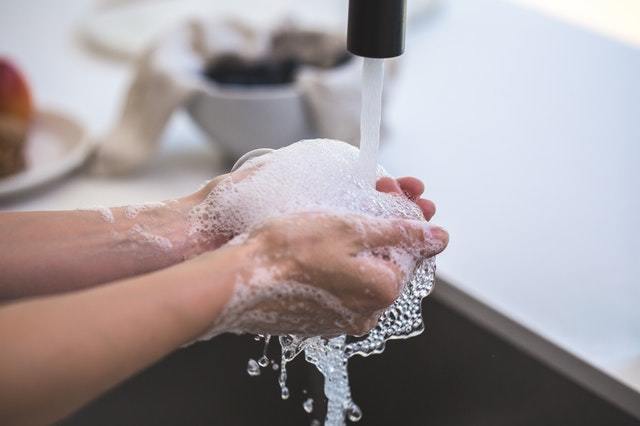
Always wash your hands before applying any ointment to the eyes
Apply the ointment directly from the tube, you can easily poke your cat in the eye if you decide to apply it directly from the tube
If your cat is willing to eat treats during the application be sure to provide them before, during and after the application so they associate good things with the medicine
To say the least it can be difficult to apply ointment or drops over a long period of time. Most cats don't like the process and will make their dislike known.
Recovery from watery eyes could be as short as a few hours or days or as long as several weeks.
It is completely dependent upon the root cause of the watery eyes.
A few examples may be the most effective way to get a handle on this:
If your cat has something stuck in her eye and you remove it you can usually expect a recovery within only a couple of hours
When your cat ends up with something like Conjunctivitis then as long as you apply the appropriate medication consistently you can usually expect a recovery within a week or two
Cats with Upper Respiratory Infections that are treated properly usually recover within a couple of weeks as well
If your kitty recently got in a fight and has a scratched or damaged eye and requires a surgical procedure then you may be expecting an extended recovery period
Your veterinarian will be most well equipped to help you understand how long the recovery will take based on the severity of the issue causing the watery eyes.
If your cat seems to have always had this issue then it may be that you've got a feline friend that is more genetically prone to having watery eyes.
Overly watery cat eyes can be caused by the shape of your cat's face. The more flat faced your cat is the more likely they are to suffer from overly watery eyes.
A few breeds in particular tend to run into this issue: Persians, Himalayans and Burmese cats are known to suffer from this problem (among several other issues impacting flat faced cats).
Cats with a flat face and large eyes usually have an issue of tears spilling out of the eye and down the front of the face as opposed to down through the nose as they traditionally would.
This means goop and gook on your cat's face pretty consistently.
Another thing worth considering is that some breeds simply produce more tears than others based on their genetic makeup.
A few breeds in particular, Exotic Shorthairs, Himalayans and Persians, are known to produce more tears than other house cats.
This means you're more likely to notice those tear stains around the corners of the eyes than you would be with another breed of cat. It is easy as a cat owner to think this is a dangerous issue that needs to be treated.
You definitely should talk to your vet about it, but generally speaking it won't harm your feline friend. If you're looking to help though you should wipe the under-eye area to keep it as clean and dry as possible as the tears can irritate the skin and cause stains over an extended period of time.
You may have seen wipes on the market specifically targeted toward helping clean up the area around your cat's eyes. These wipes are for the area around your cat's eyes, not for the eyes themselves.
If your cat has a simple ongoing watery eye issue that causes the skin around the eyes to get covered in gook or goop then cat eye wipes can be a good option.
If your cat looks to have any form of discharge or inflammation then you should absolutely not use wipes on or near your cat's eyes.
Please note that even specially formulated cat eye wipes are not intended to touch the eye of your cat and you should never use them directly on the eye!
Watering eyes are usually not something that require expensive treatment or immediate medical attention. More often than not they are caused by a temporary irritation from the environment.
This is especially true if your encounters this issue on a recurring on and off behavior like my cat Beastling does.
I constantly wonder why my cats eyes are watering then remember it is usually not dangerous!
On the other hand, if your cat all of a sudden displays this as a new behavior it may be more pressing. even more so if you also notice any form of discharge or inflammation.
Any time you notice discharge or inflammation near your cat's eyes you'll want to get your cat to a vet as soon as possible to ensure they receive a proper check up and any necessary treatment!
If you have any questions or thoughts you'd like to share regarding cats with watery eyes please leave a comment below!
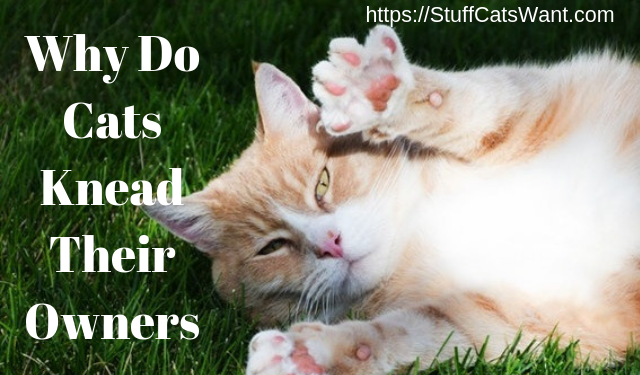
If you have a cat, like most people do nowadays, you’ve probably noticed that sometimes, your furry little friend begins making that rhythmic motion when they seem massaging either you, other cats, or the objects around. That is commonly known as kneading, a process during which they alternatively push their paws onto various surfaces.
Some cats knead only by using their two front paws, others use all four paws, while some even get their claws out while doing it. Regardless of their preferences, cats have some supposedly interesting reasons for kneading their owners and the objects around them, although not even experts know exactly why they do that. In this article, we will be talking about the most common theories.
This kneading motion can be observed in most cats, and it is something that they start doing as kittens. Kneading got its name from the similar motion that people do when they are kneading dough. It is an adorable and relaxing thing to watch, even if there are times when you’d rather take a nap than have your kitty knead you for minutes. In such cases, you can resort to some tricks to make your furry friend fall asleep or you can distract it with a toy or food to forget about kneading.
Nobody knows for sure what actually makes cats knead, but it is believed to be an inherited instinct. As kittens, they used this motion to stimulate their mother’s mammary glands to produce more milk for them. Also, it seems that in ancient times, wild cats used to make nests out of tall grass and leaves to settle and feel secure, and they used this motion to do it.
Now, modern cats might still do this when they are settling down. Apart from this, experts have noticed that female cats begin kneading more often when they “go into heat.” So, what is the reason cats still knead everything they touch? Here are some possible explanations.
This behavior is formed when the cat is just a baby and wants to drink milk from its mother. The kneading is believed to stimulate milk production in the mammary glands. However, most cats preserve this behavior into adulthood even when they are no longer around their mother.
Why is that? It seems that by kneading something soft, even if they don’t get milk in return, cats feel comfortable and safe, just like when they were small kittens. Adult cats still associate this motion with the comfort of nursing and repeat it from time to time to feel good.
2. It’s just like stretching for them
Cats absolutely adore stretching, especially after a long nap. They like to move around a bit to relieve that soreness they might feel in their legs and back. So, in a way, kneading might be their way of stretching just like humans do when they have a sore shoulder, for example.
Just like you would pull yourself against a surface to relieve that tension, cats rely on kneading. They do it frequently just because it feels so good. After another nap, they’ll do it all over again, sometimes on you, other times on your sofa.
Your furry friend might start kneading while in your lap. The problem is that, sometimes, this behavior might hurt a little because some cats like to also use their claws for kneading. Don’t worry because the harder it digs its claws into you, the happier it is and the more it loves you. When cats knead their owners it’s also a strong proof that they love them.
However, if your cat becomes a bit too excited with the claws, try putting something between them and your lap, or rub its belly instead. No matter what you choose, never punish or scold your kitty for kneading you! They don’t want to hurt you, they just want to love you. So, a good idea would be to regularly trim the claws or buy some nail guards to protect yourself from its loving claws.
4. They mark their territory
Cats are very territorial by nature and they don’t like sharing their things or owners with others. So, in order to mark their belongings, they use a special scent. That kneading behavior is also part of this ritual because by doing it, cats activate the scent glands inside the pads at the bottom of their paws.
Each time they knead on any soft surface or you, they are marking their territory. So, your cat basically owns you whether you like it or not.
5. Female cats knead more often when they “go into heat”
Another reason for kneading is present only in female cats. It seems that this fascinating behavior intensifies every time they “go into heat”, as this time period is commonly known. Scientifically, this is called estrus, or when a female cat (or any female mammal actually) wants male attention and shows it through various behaviors.
They usually knead more often to show males that they want and are able to mate at that moment. A solution would be to neuter/spay your cat because it diminishes and even stops this kind of behavior.
In conclusion, cat owners should know by now that their furry little friends have some funny little traits that they adore to exhibit all the time. From kneading to purring, felines make our lives much happier, entertain us, and love us even if they don’t always show it.
The truth is that not even experts are entirely sure why cats knead their owners, but regardless of the reason, one thing is sure: it’s an instinctive behavior which also suggests they feel safe and like to be your pets.
Sybella Montgomery is working for a website, PetToysPro that specializes in animal toys for different types of animals. Her passion and dedication for animals well-being are what brought her to do this.
If you’ve ever had your cat wandering around with a clearly filthy butt you’ve probably wondered to yourself ‘What the heck is she thinking? Why doesn’t she clean up right after using the litter box?’
You might even have bits of poo stuck in your cat's hair, or cat dingle berries. Yuck.
This can be incredibly frustrating for owners. Not only does it look gross, especially since cats love to show off their butts all the time.
The major reason this is frustrating is your cat can leave nasty little stains and trails if they don’t clean up quickly and decide to sit down or lay down in a specific position.
So why doesn’t your cat clean her butt after a visit to the litter box? Are there specific reasons for it? And more importantly is there anything I can do to help encourage her to clean up sooner?
While there are a many potential reasons for cats not cleaning their bum, they more often than not fall into a couple large buckets:
1. Access
This is the number one culprit. You probably don’t think of it often because we humans don’t often have this problem, but some cats can simply not reach their butt to clean it. This can happen for several reasons:
Weight is by far the most common. Some cats are simply so overweight they can no longer reach their butt to clean it.
If your cat is in good shape from a weight standpoint it could be possible that arthritis is getting in the way as your cat ages and bending in that fashion is difficult for your cat.
2. Time
Also worth noting is time. Not all cats immediately clean their butt after the litter box. They might wait for a period of time before they decide to get around to grooming themselves.
Since cats have a typical order of operations ingrained into them (hunt, kill, eat, groom, sleep) you may help push them to clean up by providing a play session then feeding them after.
This will drive most felines to groom themselves, and the butt is usually included in their grooming. If you need tips on how to play check this article out.
How Can I Help My Cat Clean Up?
There are numerous methods you can use to help your cat clean up if you don’t want to wait for her to do it herself, but the most common and easy are below.
1. Cat Wipes
There are also special cat wipes on the market that are engineered specifically for this purpose. You will want to avoid any scented versions as most cats really don’t enjoy new scents or odors, especially applied to themselves. Again simply let it air dry.
A warm wet wash cloth can be used to wipe up your cat’s butt. Be sure to wash it thoroughly immediately after or rinse it out and throw it right in your washing machine. Let your kitty air dry after.
3. Paper Towels
You can use a damp paper towel to wipe down the area and help clean things up. Clearly your cat won’t particularly like this feeling, so you’ll have to be quick. Having another person to help hold your cat while you wipe is very helpful. Be sure to use a good quality paper towel when cleaning or it might tear and leave little tidbits behind. Let your cat air dry after.
4. A Cat Butt Bath
If things are especially messy and hardened then you may need to soak your kitty’s rear end in the water to loosen things up before you can get the mess out. Be sure to use a cat specific shampoo and I’d personally recommend wearing some rubber gloves to clean up this kind of mess.
What Can I do to Prevent This Behavior?
There are a couple of major things you can do to help your cat in this area:
1. Check Your Cat Constantly
If your cat has this issue on a recurring basis then the best thing you can do is keep an eye out for it all the time. As soon as a little bit of gook gets stuck in her fur it is only more and more likely to grow worse.
Be vigilant and clean things as soon as they start to minimize and issues. Check her when she comes out of the litter box.
2. Accessibility
If your cat is overweight the best thing you can do is put her on a diet and an exercise plan to help her lose weight. Be sure to play with your cat every day so she doesn’t sleep her whole day.
If you’re free feeding your cat with dry food you should also stop this behavior immediately. You should consider an automatic cat food dispenser to work on portion control and timing.
If your cat arthritic then you should instead talk to your vet about the option of a glucosamine tablet which may help your kitty’s joints loosen up a bit so she can reach back there again.
3. Food
The biggest culprit of a messy cat butt is almost always driven by the diet of the cat. If your cat tends to have poop that is not solid it is much more likely to cause a mess and get stuck in her fur and get all over the place.
Be sure you’re providing a high quality diet for your cat is loaded with high protein foods. If you need some recommendations you can take a look at this article for some great options. You may also want to consider a food that is formulated specifically for cats with a sensitive stomach.
If you’re still having trouble talk to your vet about options for your kitty from a food standpoint. The best method my vet has recommended (Lexi has a sensitive tummy and long hair) is to try a single food at a time for about a week and see if it helps make her stomach feel better. If not, move on to the next food.
On this note, if your cat is primarily an indoor cat and normally doesn’t get outside then try to keep your cat indoors in general. Eating a wild animal they catch can really jumble up their stomach because they simply aren’t used to it anymore.
4. Hair Maintenance
Long haired cats are most notorious for this particular problem because their fur is all over the place around their butt. Be sure you're brushing them daily to minimize loose fur. It is very easy for poop to get matted into the fur and then your cat simply cannot get it out on her own.
Ensure your cat is properly trimmed around her hind quarters. Many groomers will do what is called a ‘maintenance trim’ in this area to keep things short and help minimize this kind of issue.
If your cat is short haired then this is less likely to be a problem. Even so you can still do some trimming in the area or have a groomer do some trimming to keep down the chances of the fur getting matted with yucky stuff.
If you do decide to do the trimming yourself be sure to use a comb and use blunt ended scissors so your kitty doesn’t get poked. The comb should always be between the cat’s skin and your scissors to minimize the risk of injury.
I’d personally recommend a groomer if you can afford it as they have a ton of experience and will be far less likely to injure your feline friend. This typically costs about 15-20 dollars and a visit every 3-4 months is normally sufficient.
What If My Cat Left a Mess Behind?
There's always of course the dreaded situation that your cat decided to sit down in an unfortunate position before cleaning up and then left behind a nice stain for you on your couch or your carpet. Mine just sat on my sheet music next to piano...Now I can really truly play like crap.
Never fun in the least to find one of these behind. On the bright side, there are some good ways you can approach cleaning them up. No matter which method you decide to use I'd recommend wearing rubber gloves and washing your hands thoroughly once finished.
Soap & Water
No surprise, you can always go for the old fall back of traditional soap and water. This works best when things are still 'fresh' as disgusting as that sounds. Just take warm water and dish soap and a scrubbing brush and get to work on the spot.
Specialized Cleaners
There are numerous cleaners on the market specifically designed to more easily stains from your cat. You'll want to use one specific to your situation.
It is worth noting that most of them have enzymes to kill odors and remove stains far more effectively than traditional soap and water. Be sure to read directions closely to achieve the best results.
Wrapping it Up on Dirty Cat Butts
More often than not the reason for a dirty cat butt is either an issue of time or an issue of access to the area. If it is an access issue there are a bunch of things you as a cat owner can do to help whether it is help your cat lose some weight or get her something to help her arthritis.
This can turn into a recurring problem in some cats that are older and you may have to simply help your kitty clean things up with wipes or with paper towels.
There are a lot of options out there, be sure to use things specifically formulated for cats, not humans. Using human formulas can cause more irritation and make the problem even worse.
Also be sure to consider visiting a groomer from time to time if you have a long haired cat. This can make all the difference in minimizing places your cat can get dirty to begin with.
If you have any experiences you’d like to share then please leave a comment below or write me directly at Craig@StuffCatsWant.com.
StuffCatsWant.com is a participant in the Amazon Services LLC Associates Program, an affiliate advertising program designed to provide a means for sites to earn advertising fees by advertising and linking to Amazon.com.
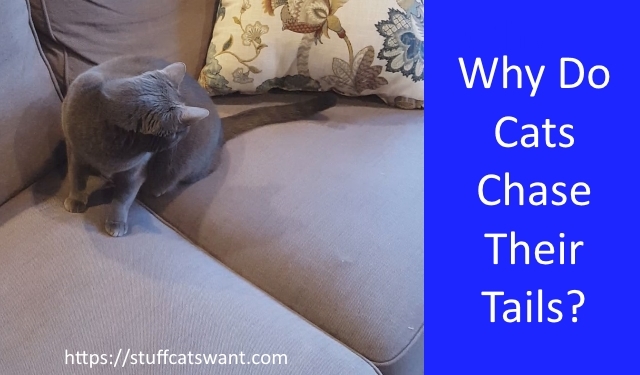
Contrary to popular belief, dogs are not the only household pet that will chase their tails. Cats do this too, though it is less common! You might think it is pretty funny to watch, and for the most part it is.
But if tail chasing becomes a consistent activity then your cat may be telling you she needs medical attention. On the other hand, if your cat chases her tail here and there then she may just be a bored kitty looking for entertainment.
This is a video of my cat Beast. She chases her tail for fun and attention! She’s been checked out at the vet to ensure nothing is wrong, she’s just a silly fur ball that gets a kick out of chasing her tail then falling asleep!
So let’s get right into the meat of it. Let’s answer the question “why do cats chase their tails?” and whether or not you should be concerned if your cat is chasing her tail.
How Old Is Your Cat?
First and foremost we should discuss age. Kittens exhibit a lot of interesting behavior while they are learning. Tail chasing is one of the more common behaviors kittens show.
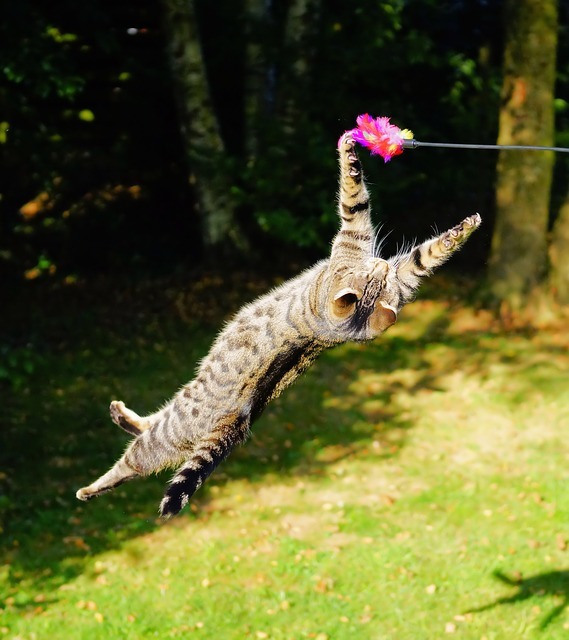
Kittens are notorious for attacking anything and everything that gets near them, especially anything that moves.This includes shoe laces, long hair, wand toys and of course their own tail. Being an aspiring hunter this is no surprise, pouncing on moving prey is a natural instinct.
This kind of behavior helps your kitten practice skills that she’d normally use in the wild. Kittens slowly phase out this behavior as they get older. Tail chasing should become uncommon by the time they are about a year old.
If your kitten is attacking her own tail constantly and it is looking beat up then do your best to redirect her to other toys. There are an unlimited number of toys that look like a cat tail, but the most common (and often the cheapest) are wand toys.
If your cat is under a year old and chasing her tail often then you’ve probably got nothing to worry about, but it is certainly worth noting to your vet at the next check up! If your cat is older than a year and still chasing then read on for more information.
Boredom Is the Biggest Culprit
If your cat is now fully grown and is still chasing her tail the most likely reason is she’s bored. Cats need stimulation and exercise to maintain mental and physical health.
Cats, especially cats without a feline friend in the house, are often left at home for long periods of time while their family is at work or at school. This means they build up a lot of energy that needs to be spent doing something, anything. Even chasing their tail.
If you’ve ever gotten an ache in your legs and you feel the need to go running then you know exactly what I mean! Without structured play sessions or a playmate cats will go after their toys or potentially chase their tail.
There are lots of toys and methods you can use to tire your cat out, even when you’re not at home. Check out this article on tips to get your cat to sleep at night. It is full of methods to keep your cat awake and alert when you’re not around!
Cats Desire Attention And Treats Too
You can certainly train your cat to perform tricks, lots of people have. So it should come as no surprise that cats can learn new tricks on their own too!
Any long term cat owner knows that cats typically desire interaction on their terms. Cats sometimes realize they can get attention, interaction, or even rewards if they chase their tail. We humans tend to find the behavior cute & funny after all.
When your cat chases her tail then you might laugh, pet her or even give her a treat. If you do then she may associate tail chasing with good things. This is basic positive reinforcement and may encourage your cat to keep chasing her tail. Be sure to consider your own behavior to see if you may be impacting your fluffy friend.
When To Seek Medical Attention
Tail chasing is usually a simple pass time or way to alleviate boredom, but it can also be an indicator of a medical concern. Dr. Richard Goldstein says “when an animal is pointing to a certain body part, consider all the body parts in the area that could be the source of a problem.”
Medical issues that can cause a cat to chase her tail can range far and wide, but the there are a few more common reasons:
Skin/Food Allergies: If your cat touched something (a new fabric) or has been exposed to something (a new food) she is allergic to her tail may be itching or otherwise in discomfort which may cause her to chase it.
Feline Hyperesthesia: While the cause isn’t known, VetInfo and PetPlace indicate it can be thought of as a form of Cat Schizophrenia. It sometimes results in a fixation with the tail, often manifested as swishing of the tail, chasing of the tail or attacking the tail. It can also cause frantic grooming of the flank and tail, often leading to hair loss.
Impacted Anal Glands: If the glands get impacted it may be painful to poop and your cat may be more likely to go after her own tail according to PetMD.
Fleas: Fleas often live on just above the base of the tail and on the butt of pets. Even if your pet isn’t allergic flea bites can be very painful. If your cat so happens to be allergic a single bite can cause quite an episode.
The above are a subset of potential medical concerns that can cause cats to chase their tails. If tail chasing is a new and constant behavior then get your cat to the Vet as soon as possible for a checkup as it may be a symptom of something more serious.
Wrapping It Up on Cats Chasing Tails
Your cat chasing her tail is typically not something to be worried about, especially if your cat is young and still learning how to hunt and pounce. If your cat is an adult and chases her tail occasionally then she’s probably just bored or has learned she gets treats or attention after doing so.
If tail chasing is a brand new behavior and is a constant occurrence then it may indicate a medical problem that needs attention. Be sure to get your cat to the Vet as soon as possible for a full checkup!
Have you had a cat that likes to chase her tail or was chasing it for a medical reason? Please leave a comment below or email me directly at Craig@StuffCatsWant.com if you have any thoughts or experiences with cats chasing their tails.
StuffCatsWant.com is a participant in the Amazon Services LLC Associates Program, an affiliate advertising program designed to provide a means for sites to earn advertising fees by advertising and linking to Amazon.com.
If your cats are anything like my cats then from time to time they decide to lick you. Now this feeling isn’t anything like that of a dog, dog licks are generally a little bit wet and sloppy and afterward you’re thinking to yourself ‘Thanks, but that was kind of gross.’ Cats on the other hand have their own bag of tricks and have an equally perplexing lick, one that is instead dry and feels a little bit like sand paper.
So when your cat licks you is she rewarding you? If she punishing you? Is she doing this because she likes you? Let’s take a look into and look at why cats lick in general and then figure out why do cats lick their owners! We’ll also discuss a few options you can consider if you’re not a fan of cat licks and you’d like to modify this behavior.
Why Do Cats Lick In General?
There are a couple of major reasons that cats lick, but they are mostly related to cleanliness. The two biggest reasons cats lick themselves or each other are:
To clean themselves: When a cat licks herself it is pretty general grooming behavior. Cats spend a hefty chunk of their day, every day, cleaning themselves. A little vain don’t you think? While it may sound odd how much time they spend grooming it is primarily a survival mechanism. Not only does it keep them clean but it also removes the scents that would historically be left on them from hunting. This ensures other predators can’t track them as easily which keeps them safe and sound.
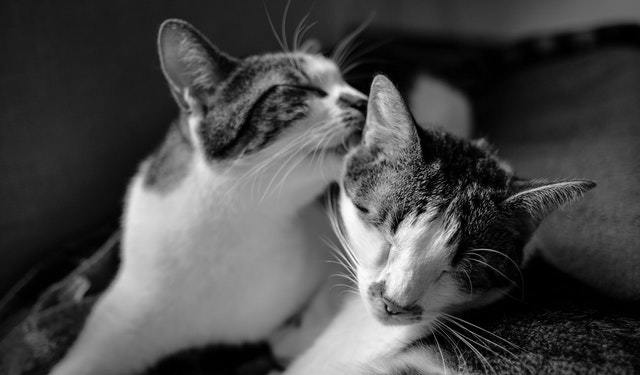
To clean their close friends: When cats feel incredibly comfortable with each other they’ll often go through the process called bonding. What this essentially means is that these cats are best buddies. You’ll see them do everything from sleeping on top of one another to wrestling to you guessed it, licking each other to groom one another. This is a very positive behavior because it helps cats reach places that are difficult to reach on their own like their ears and the top of their head.
Does the Tongue Do a Good Job?
Cat’s tongues are actually quite a bit different than that of a human or a dog. Your cat’s tongue feels like sandpaper because it’s covered with a boatload of these little things called papillae. These are made of keratin (the same stuff a cat’s nails are made of) and they resemble little hooks that face the back of the mouth.
Why you might ask? They likely evolved this way because they help cats pull meat off bones, a pretty handy skill when cats weren’t fed boneless wet food or crunchy dry kibble.
More importantly for this article, those papillae also assist in grooming. They mimic a comb or a brush and every time your cat drags her tongue across her body they do things like pull out loose fur and dirt. Now you can also see why your cat might end up with hairballs, she is basically combing herself with her tongue and ends up swallowing a lot of that hair. This is the reason brushing your cat often helps you stop your cat from vomiting.
So Why Do Cats Lick Their Owners?
At this point you’re probably saying to yourself “But I’m not dirty, I don’t stink! I don’t need my cat to clean me.” But let’s be honest, we all know you only shower once a week and that you likely could use a little extra help….Just kidding! Honestly though, if your cat is licking you they aren’t necessarily telling you that you smell bad or that you’re not clean, they’re doing it because they look at you as an incredibly close friend/companion.
Generally speaking, cats only lick people they feel 100% comfortable around. There are of course exceptions to the above, but the bulk of cats will only lick people they consider near and dear to them. So take this as a really positive sign!
What If My Cat Won’t Stop Licking Me
While not the most common problem in the world, it does surface from time to time. Some cats simply won’t stop licking their wonderful human. This is typically not considered normal behavior and is likely driven by anxiety of some sort. Cats get anxious from a lot of different things, but some of the most common are: new people in the house, a new pet in the house, a recent move, and the list goes on.
If none of the above have taken place recently but your cat is still constantly licking you then she might be stressed for a variety of other reasons. One of the best ways to help a cat destress is to provide structured play sessions every single day.
This means taking time to specifically interact with your cat and ensure she gets to spend some of her pent up energy! A wand, a laser pointer, a piece of string, any of these make a great toy to play with your cat. If you’re not sure what to do then check out other my article for a few ideas on playing her.
If you’ve already been playing with your cat but you aren’t having any luck then you should consider trying to redirect your cat’s attention when she comes to lick you. This can be done in a variety of ways, but the most common is with a cat nip toy of some sort or perhaps a puzzle toy with treats inside it. When she comes to lick place the toy near her mouth instead or shake the puzzle toy and roll it on the ground so she can go after it.
If structured play and redirection fail to do the trick then it might be worth a vet visit to see if your feline friend has a potential health issue.
Wrapping Things Up
There’s quite a bit to read here, so if you don’t have the time and you just want to know why do cats lick their owners then read the summary below! I’ll quickly recap the article:
Cats lick for a variety of reasons, but if they are licking you it is because they like you! Take it as a compliment.
If they are licking you or themselves too often they might be overly nervous or anxious.
You can try to distract your cat by playing with her or putting a toy in her mouth when she licks you.
Last but not least, per usual, yelling at your cat or scaring her when she licks you or herself is not going to help change her behavior. In fact, if anything it will likely result in encouraging the bad behavior. Be sure to be patient with your furry friend while you figure out the problem and resolve it!
If you have any other thoughts or stories on cats that have been persistent in licking you or cats that have needed some help to stop licking themselves then please leave a comment below or send me an email at Craig@StuffCatsWant.com so I can update this article.
StuffCatsWant.com is a participant in the Amazon Services LLC Associates Program, an affiliate advertising program designed to provide a means for sites to earn advertising fees by advertising and linking to Amazon.com.
If you’ve got a feline friend in the house odds are you’ve attempted to pick her up at least a few times in your life. You might have one of those cats that absolutely loves it, my cat Lexi doesn’t seem to mind it one bit. You can rock her like a baby and lip her upside down and she just rolls with it. When she wants down she’ll let you know by starting to push against you, but for the most part she’s pretty accepting.
On the other hand you might have a cat like my cat Beast as well. She tenses up immediately the second your hand hovers over her neck for more than a second and will bolt if possible. Even though I use the vet recommended method of sliding one hand under her chest and one under her hind to hold her up she still is wound up like a spring the entire time you hold her. You can tell she is not happy about the situation and wants out as soon as possible.
So why is that Lexi loves being picked up and Beast is absolutely horrified of it? Why do some cats not like to be held? Let’s look at a few potential reasons why this might happen and then point you to some resources to try to change this behavior.
You Don’t Know What They Know
Lexi and Beast are both adopted and both were several years old when adopted. Unfortunately the shelters really didn’t know much about them so they didn’t have anything to share other than Beast came from a hoarding situation and was mostly locked in a room on her own her entire first two years of her life. Beast is a little socially awkward if you can imagine, but she’s a total sweetheart! If you’ve adopted a cat you’ve probably heard similar stories or even far worse ones, but unfortunately without know the whole past of your cat it is difficult to determine if it was some experience that caused this or if it is just their personality.
That being said, one of the most likely reasons your cat doesn’t like being picked up is that she may have had a negative experience while being held in the past. Perhaps she was dropped as a kitten a few times, or someone pulled on her ears and her tail, who really knows? All it takes is one nasty experience to make it a very uncomfortable experience for them.
On the same token it could come from an experience we might not register as traumatic as humans, but your cat might. Key examples are visits to the vet and the groomer. Your cat is typically restrained in these situations and often has a negative experience (you probably didn’t like a thermometer up your butt as a kid either). It is pretty easy to see how a cat might start to see being picked up for one of these activities and being picked up in general as negative things.
It is simply scary for your cat
You’ve probably never seen a cat pick another cat up if both cats are adults. The only time you see this happen is with a mother moving her kittens from place to place and the kittens biologically know to go limp when mom picks them up.
Adult cats on the other hand tend to very slowly approach one another and if they are both friendly you might see some sniffing at an initial introduction. We humans on the other hand are not only much much larger than our feline friends (even you Maine Coon owners) but we often go straight to picking them up.
Imagine yourself in a situation where someone 10 or more times your size showed up and simply picked you up and rubbed the hair on your head when they ran across you. You might freak out too! They could easily crush you on accident or on purpose if they had any inclination.
A potential sickness or injury is afoot!
If your cat used to like being picked up but bolts every time you attempt to get near her then two things are possible. We’ve already discussed a bad experience, but if you can rule that out then your cat might be sick or have an injury.
At this point it is probably worth setting some time aside with your vet to check for injuries or medical conditions that could be causing pain when you pick your cat up. Even after the condition is treated it’s possible that your cat will still avoid being picked up because they might associate the feeling with the pain they experienced in the past.
Nowhere to Run
Similar to my article regarding cat carriers and why cats often don’t like them, being picked up is a form of being restrained. Even if it isn’t true every time a cat is picked up, cats don’t have a hard time drawing the conclusion that restraint means the humans are going to do something I don’t like: clip my nails, bathe me, take my temperature, stick me in the carrier, etc.
Knowing How to Pick a Cat Up
If you’re not sure how to pick a cat up then you should definitely learn the appropriate way. You should not be scruffing your cat, it is far too easy to permanently injure your cat if you’re not properly trained on how to do this. Instead you should focus on the standard two point pick up method. Check out this video below from VetStreet to ensure you’re pick up your cat in a safe manner!
Wrapping It Up:
At the end of the day, answering the question why do some cats not like to be held up is pretty tough unless you’ve known your cat since they were a kitten. Even then it might not be easy to identify the specific reason as it could be their personality or it could be driven by some experience they had when you weren’t home. Your cat might also simply be scared of being picked up because of your size or because they know being picked up sometimes results in a trip to the vet or the groomer.
This article isn’t aimed at modifying this particular behavior and I would encourage you to simply respect your cat’s preferences as much as you can. I know we all get the desire to pick our cats up from time to time and just can’t resist. If you are interested in getting your cat to enjoy being picked up you can check out this article, but my experience has been mixed with it being effective.
If you’ve got any other thoughts on holding your cat and why some cats do not like to be held please do share them below! If you have any additional items you’d like to see added to this post then please comment below or directly email me at Craig@StuffCatsWant.com so I can update the information here.
StuffCatsWant.com is a participant in the Amazon Services LLC Associates Program, an affiliate advertising program designed to provide a means for sites to earn advertising fees by advertising and linking to Amazon.com.
It’s 3:00 AM, you’ve just woken up to it again. She’s walking around through the entire house meowing over and over for no apparent reason. You’re wondering why you adopted this cat, you’re wondering if she is just doing this to drive you nuts, but most of all you are wondering why does my cat keep meowing?
This is an incredibly frustrating behavior for you to encounter as a cat owner, I should know, both of my cats Lexi and Beast do it from time to time. The good news is that there are a couple of common reasons your cat might be doing this. Even better, there are a couple of simple methods to help decrease the frequency of this behavior.
A Few Things Worth Noting
Two things worth pointing out before we get into the why of this article:
Cats in general aren’t known to meow at one another. Meowing is a behavior that was picked up by cats to communicate with humans, they don’t use it among themselves. This means if your cat is meowing they are trying to tell you something.
Cats are crepuscular creatures, but you can work with them to adjust their sleeping schedule to be in line with your own. While excessive meowing is annoying during the day, it is 10 times more annoying if it impacts your sleeping schedule.
Now that that’s out of the way let’s get to why you came here…
So Why Does my Cat Keep Meowing
So let’s get into the meat of it, let’s look at the most common reasons your cat is meowing up a storm and some of the easiest fixes in the book:
1. Your cat is bored our of her gourd: Just like a human a cat can get bored, really bored, especially if you are gone for long periods of time and your cat is left on her own.
Make sure you organize time to play with your cat and make sure she gets exercise. Without a good workout your cat is likely to strut around meowing to let you know she isn’t too happy. Check out my article on playing with your cat for a few ideas. Or go straight to checking out some of the top 20 toys StuffCatsWant recommends for your cat!
2. Your cat is stressed out: Stressed out cats tend to meow a heck of a lot more than their otherwise calm counterparts. My cat Beast meows 2-3 times as often when I have a foster cat in the house, even if they are separated into another room. Changes you might not think matter to a cat like a move or the loss of a family member can result in a lot more vocal cat.
Do your best to identify the recent change and if possible remedy it. If there’s not much you can do to remedy the specific cause then give your cat extra attention and be sure she has a quiet and safe location that can help soothe her.
If you do have a new cat in the home you can also check out Feliway Multicat, read my review of it here.
3. Your cat wants her breakfast or dinner: You know how your stomach growls when you’re hungry? My cats meow when they are hungry. Well, let me rephrase, Lexi meows like a nut when she is hungry and she knows she gets fed at 8 AM and 9 PM daily. Check out this video of her when she knows it is dinner time.
Do your best to set a schedule when it comes to feeding and talk to your vet about the appropriate amount of food for your cat. If you can’t be home to provide food on a consistent schedule consider an auto feeder. Free feeding your cat with dry food is not the answer.
4. Your cat is in heat: If your cat isn’t already spayed or neutered then they are likely to be a heck of a lot more noisy (some of the time). When they are in heat female cats are going to yowl and as soon as a male smells a female in heat he’ll start doing the same thing.
Do yourself (and the world) a favor and get your pet spayed or neutered.
5. Your cat wants to be where you are: Despite popular belief that cats like to be alone, most cats do actually enjoy companionship of their human friends. If you sleep in a room with the door closed at night and your cat is meowing outside this is a great example.
The simplest solution might be to simply open the door and let them come into whatever room you are in. If that isn’t an option you can try things like a treat puzzle to keep them busy while you are in the other room.
6. Your cat is getting older: While the average lifespan of cats is expanding with better medical care, there are many of the same problems that humans run into regarding staying sharp as they age. Cats can become disoriented and will meow for no reason other than to let their human know they are confused. This is especially common at night.
Veterinarians can prescribe medications that help these symptoms and they might have other recommendations depending on when and how the behavior is triggered.
7. Your cat is sick: If none of the other items here seem to be the culprit then a thorough checkup by your veterinarian is in order. Numerous diseases can cause a cat to feel hungry even when they aren’t. There’s also the potential problem that your cat might be in constant pain which can lead to constant meowing.
WebMD also indicates that elderly cats can develop an overactive thyroid or kidney disease and that both of these can result in excessive meowing.
8. Your cat is welcoming you home: Many cats meow when their people come home, mine both meet me at the door and then promptly run off if I try to pet them for some reason or another.
If this is the worst you have then I’d say you’re doing pretty well!.
Note that nowhere above did you see me indicate the solution is to yell at your cat. Yelling at your cat, spraying your cat with a squirt bottle, shaking coins in a can, these methods will not solve the root cause of the behavior. More than likely they’ll just make your cat afraid of you instead! Do your best to identify the root cause and then work with your cat in a positive way to solve it. Always keep in mind that a tired out cat with a full tummy is likely to get some sleep!
Time for a Quick Recap
So now you’ve got several answers to the age old question why does my cat keep meowing! The general idea is that your cat is trying to communicate something to you. It is your job to figure out specifically what and do something about it.
I hope that the solutions under each of the major causes come in handy and help you make progress with getting your kitty to quiet down! If you have any other thoughts on why your cat might be meowing incessantly or how you’ve managed to put a stop to it then please leave a comment below or send me an email at Craig@StuffCatsWant.com so I can update this article.
StuffCatsWant.com is a participant in the Amazon Services LLC Associates Program, an affiliate advertising program designed to provide a means for sites to earn advertising fees by advertising and linking to Amazon.com.
Your kitty is sleeping in the litter box all of a sudden and you don’t know why. What happened, what’s going on? You’re asking yourself why is my cat sleeping in her litter box and how do I fix it!? The good news is there’s usually a pretty straight forward reason for why your cat is sleeping in the litter box.
The better news is there are several good ways for you to be able to combat this type of behavior. Let’s take a look at the most common causes and then we’ll dig into how to help fix the root cause.
Why is My Cat Sleeping In Her Litter Box
Sleeping in the litter box is a very common behavior for cats that are under a lot of stress. This stress can be caused by a lot of things, but the most common reasons for this type of stress are:
You’ve recently moved your cat to a new and unfamiliar space
You’ve introduced another pet (cat or dog) into your resident cat’s space
You’ve introduced another human into your cat’s space
Your cat has a sickness of some sort
Your cat is pregnant and doesn’t have a spot to give birth
Now while this behavior probably seems disgusting to you as a human and you probably haven’t seen your cat spend so much time in the litter box since they were a kitten (those kittens certainly love play in there!), it is a perfectly logical behavior for your cat.
So why does the litter box strike your cat as a good place to sleep? There are a couple of theories behind this behavior, but the most commonly accepted theories are:
Cats mark their territory with urine and the litter box smells like their urine so they consider it to be their own territory and thus safe.
Your cat might be reinforcing their ownership of the territory (in the case of a new cat being introduced) by not only peeing in a space, but also physically occupying the space as well.
The litter box is very similar to other places your cat likes to sleep in that it is small and limits approaches so your cat can see who is coming and going. This makes your cat feel safer when in a new environment.
If your cat is pregnant and doesn’t have a place to give birth (a box with warm fluffy towels that is enclosed and away from all the busy places in the house) she might determine the litter box as the next best place because it meets most of the criteria.
How Do I Stop My Cat From Sleeping In Her Litter Box
There are several remedies available to help you combat this behavior, but they’ll have different results depending on the problem that is driving the behavior. If you’re in a new space your cat should gradually adjust over time and stop sleeping in the litter box as they get more familiar with the space. That being said you probably don’t want them sleeping in there if you can avoid it…
While I’ll leave it to you to determine which one you want to try, I did my best to categorize them into logical groupings:
New Place / Environment Remedies:
Provide another litter box (identical if at all possible) right beside the one your cat is sleeping in, but instead of filling it with litter go for warm blankets or your cat’s favorite bed. Even a towel with your cat’s scent on it (or even your own scent) might help entice them out of the litter box. If a towel or bedding doesn’t work give shredded paper a shot as well.
Place a Feliway Diffuser in the room your cat is spending the most time in to help them relax and feel more comfortable in the new space. You can read more about Feliway here if desired, but the general idea is it is a synthetic pheromone that helps calm cats in stressful situations.
New Pet / Human Introduction:
Ensure you have a sufficient number of litter boxes in the house, especially if the new pet introduced is a cat. This is a common problem when you have a cat going outside the litter box as well. It is generally recommended that you have at least 1 litter box for each cat and if you have room add an extra one. This ensures there’s plenty of room and privacy in the boxes.
Make sure your cat has their own safe space in the case of a dog being introduced, perhaps put up a baby gate to provide safe room just for your cat.
Be sure the litter box is in an out of the way location away from the normal foot traffic in the house.
Medical:
If there haven’t been any other major changes in the household recently and this behavior persists more than a few days you should get your cat to the vet ASAP to ensure there aren’t any medical issues causing your cat to sleep in the litter box.
Pregnancy:
This one is probably pretty obvious because you’ll know if you have a female cat that hasn’t been spayed and likely know if she is pregnant too. The easiest solution here is to provide an alternative space that is safe, enclosed, warm, and out of the way for your pregnant cat.
Wrapping It Up
When you’re wondering why is my cat sleeping in her litter box you should definitely dig into the root cause and figure out what is going on. If you’ve already gone through the motions of ensuring there isn’t a medical reasons then consider what other changes have gone on recently in your household.
While small changes may not seem like much to you as a human, they can often be incredibly impactful to your sensitive little fluff ball and she’s likely hiding in the litter box because she thinks of it as a safe spot.
If you have any other thoughts on how to keep your cat from sleeping in the litter box then please leave a comment below or send me an email at Craig@StuffCatsWant.com so I can update this article.
StuffCatsWant.com is a participant in the Amazon Services LLC Associates Program, an affiliate advertising program designed to provide a means for sites to earn advertising fees by advertising and linking to Amazon.com.
Ugh. You just found pee on the floor again, or worse yet, poop! Fluffy was using the litter box habitually for the past year and all of a sudden she stopped! What happened? Why do cats stop using their litter box all of a sudden when they’ve never had problems before? While this may sound uncommon, it really isn’t and you might find that you are the cause.
It is also important to note that your cat isn’t doing this all of a sudden to spite you or just to make you angry. There’s usually a relatively simple reason your cat stopped using the litter box all of a sudden and you should be able to at least narrow down the cause on your own. So let’s first take a look at some of the most common causes, how to identify them & then how to resolve them as well.
The Litter Box Itself Is Often the Problem
The most common reason a cat will stop using the litter box is the litter box itself. If something has changed recently this can often drive a cat to stop using the litter box. Great examples of this are things like:
Cleaning: If the litter box is being scooped/cleaned less commonly than normal this can often cause a cat to stop using it. You don’t like using a dirty bathroom, your cat doesn’t either. Be sure to scoop your litter box on a consistent basis, especially if you’re in a multi cat household. If you can’t scoop it yourself then consider an automatic litter box.
Litter Change: If you’ve recently changed the type of litter in the litter box this can often have an adverse effect as well. Changes in the litter can include any of the following:
You’re trying a new scent – Cats have a highly developed sense of smell and a slight change can turn them away.
You’re trying a new type (wood/clay/crystals) – Cats have very sensitive paws and can find new types of litter uncomfortable to stand or walk on.
If there’s a distinct need to switch litters then be sure to do it gradually, consider this article from FloppyCats on how to switch your cat litters.
Declawing: While I’m personally very against declawing for a laundry list of reasons, it should also be noted that declawing your cat can cause litter box issues. Declawing leads to even more sensitivity in their paws and walking on litter can be incredibly painful, especially right after the surgery. If you’ve recently had your cat declawed and a litter box problem has developed then this is likely to be the culprit.
The Location: If all of a sudden a new person has appeared in the household and they are creating additional traffic near the litter box this can cause your cat stress. Common examples are long term house guests or a kid coming home from college for the summer. If your cat was used to a nice calm and quiet space and now it is noisy and filled with new scents and people this can cause them to avoid the space. Either adjust the location of the litter box or adjust the location of your house guest to ensure your cat has a nice quiet spot they feel is their own.
No Privacy: Cats in general tend to prefer their own litter box. While many will use a single box even when there are multiple cats in a household, if you’ve recently introduced a new feline to the household and there is only one litter box this can often cause your resident cat to take offense. The general rule of thumb is to have at least one litter box available for each cat in the household and if possible have an extra.
The Litter Box: If you’ve recently switched out your old litter box for a new one this might be the cause. If your new box has higher sides, is covered, is top entry or in any way different from the previous litter box this can cause your cat to change their tune on wanting to use it. Try switching back to your old litter box temporarily to see if this resolves the problem.
A few general rules of thumb to follow to keep your cat using their box
Keep these things in mind for any litter boxes you setup in your house:
Most cats prefer less litter as opposed to more (about 1-2 inches tops). Not only is this good to know for litter box use, but it tends to minimize litter tracking as well.
Most cats prefer unscented litter. Scented litter is for the benefit of humans.
Most cats prefer clumping litter.
Most cats don’t like lids on their litter box even though we humans often prefer them for scent control and litter tracking purposes.
Cats like their litter boxes located in a quiet location and don’t want to feel trapped when using it (another reason they don’t like lids). Cats prefer to be able to watch all approach paths.
The majority of cats prefer large boxes that they can enter easily. Be sure to buy one size appropriate for your kitty.
Most self-cleaning litter boxes have gotten smarter these days about building delays into the scooping function because it can scare cats. That being said, if you’ve recently switched and your cat stops using the litter box it is pretty easy to put 1 and 1 together.
Sickness
Another common reason a cat would stop using the litter box is due to some form of sickness. The most common sickness that would cause a cat to stop using the box is a Urinary Tract Infection (UTI) which makes urinating incredibly painful for your feline friend. This makes your cat start to associate pain with the litter box and thus they start to urinate elsewhere not realizing that it isn’t the litter box causing the problem.
While UTIs are one of the most common reason there are a multitude of other potential sicknesses like bowel disease, diabetes, arthritis, kidney, liver or thyroid malfunction and many more that could all impact your cat. Bowel disease, constipation, diarrhea and UTIs will typically be easily treated with medication. If this does happen to be the problem then she should return to using her litter box as soon as her discomfort fades away.
On the other hand if you determine that your cat is suffering from a more permanent issue you might need to make some adjustments to ensure your cat can comfortably use the litter box. A good example might be an arthritic cat, you might need to get a litter box that has far lower sides so it is easy to get in and out of it.
How do I Identify The Problem
The easiest way to help you identify the problem causing your cat to go outside the litter box is to separate your cat into their own space and observe them. You can use the process of elimination to knock out all of the easy ones, particularly those associated to the litter box itself and any recent changes in it.
You’ll want to provide a well cleaned litter box that is in the form your cat was using before the problems started. If you have to pull out an old one that you’ve recently changed then go ahead and do so. Be sure it is in a quiet and secluded space so your cat is comfortable and doesn’t feel like their space is being invaded.
If in this new space your cat continues to avoid using the litter box then you can start to narrow down the causes based on what is happening. Observe the cat and notice if she is straining to go and/or crying out while eliminating. If she is it is definitely a medical concern at this point and you should talk to your vet as soon as possible.
If you’re unable to identify the specific reason, but it is clear your cat is in pain then you should get your cat to a veterinarian as quickly as possible to get a full checkup. Not only can your vet help you identify potential reasons for the lack of litter box use based on your cat’s behavior, they can also provide more pointed recommendations on what might help provide relief for both you and your cat.
It Is Important To Note
As soon as you recognize your cat isn’t using the litter box you should do your best to narrow down the reasons why. Keep in mind your cat isn’t doing this to cause you trouble, they are trying to notify you that there’s a problem. Cats often don’t understand what is happening and they are just trying their best to be happy and avoid pain so this can be a bit like solving a puzzle for us humans.
You musthavepatience with your cat to ensure she can get back to full health and start using the litter box again normally. Note that just like anything with cats, punishing your cat by yelling at him or her isn’t going to help the problem, it will just make it worse. To add onto the yelling thing, here are a few other notes you should keep in mind about punishing your cat as well:
While you may have been told when you were younger that rubbing the nose of your pet in their accident can help them ‘make the connection’ to the problem before you put them where you want them eliminate, this has been proved to not work at all. Animals simply don’t connect things the way humans do and you’re likely to just scare your cat if you do this.
Don’t try to put your cat into the litter box after an accident. She will not make the connection and may instead think she isn’t supposed to use the box because your cat will think the box is someplace where she gets punished.
While I’ve mentioned this in numerous other articles, squirt bottles are not a great way to teach your cat. Your cat is far more likely to simply be scared of you as opposed to stopping whatever she was doing when you squirted her.
While confining your cat to identify the problem is a good idea, confining your cat long term is not a solution. It doesn’t solve the problem that caused your cat to start going outside the litter box anyway.
Never put your indoor cat outside because of a litter box problem. Indoor cats should be indoor cats and suddenly placing them outdoors can expose them to a multitude of problems both health related (fleas/disease/etc.) and danger related from predators and things like cars! You need to work to solve the problem.
Spraying and Litter Box Issues Are Not the Same Thing
Spraying is a separate issue from regular litter box issues and is typically caused by territory issues. If your cat is constantly peeing on your furniture or in the same spot over and over your cat is spraying. There are a multitude of great resources that can help you resolve issues with spraying, here are some the most well regarded:
So why do cats stop using their litter box and how do I solve the problem? For anyone who doesn’t want to read the whole article or wants a quick overview, here are a few bullet points that cover the highlights:
The most likely reason a cat has stopped using the litter box is a recent change in the litter box we humans made: litter, location, traffic, cleanliness, etc.
Be sure to make any changes to the litter box gradually so you can monitor the progress of your cat
If you’ve eliminated all litter box related issues your cat may need medical attention, take her to a vet right away
Don’t punish your cat for accidents, not only will she not learn from this, you will likely make the problem worse
If you have any other thoughts on the litter box issues you’ve encountered with your cat then please leave a comment below or send me an email at Craig@StuffCatsWant.com so I can update this article.
StuffCatsWant.com is a participant in the Amazon Services LLC Associates Program, an affiliate advertising program designed to provide a means for sites to earn advertising fees by advertising and linking to Amazon.com.
You’ve probably realized by this point that your cat sleeps a lot more than you do and you’re probably not only jealous, but you might also be wondering why. Why do they get the joy of dreaming for so many more hours a day? Why do they get to laze about and snooze in the sun while we work to provide food for them? Why do they seem to wake up so quickly when you approach them while they are sleeping? Why why why does my cat sleep so much? There are so many questions to answer about cats and sleep! So let’s get right into how much they sleep, why they sleep so much, and then dig into the types of sleep they have as well!
How Much Does a Cat Sleep Each Day?
Cats rank among the animals that sleep the most in the entire animal kingdom. Cats sleep somewhere between 16 and 20 hours a day and very young and very old cats might even sleep more than this! When they are first born in fact they sleep almost 24 hours a day. While the latter situation is typically based on the fact that they are just born and can’t do much else, once they grow out of this stage they still spend a very large portion of their life asleep.
Why Do They Sleep So Much
There are numerous reasons cats tend to sleep so much, especially domestic cats. First and foremost I think it is simply because they can. Cats in general don’t have a lot that is necessary to do throughout the day as a domestic animal so they are free to get as much time asleep in as possible.
Now that being said, why they are prone to sleep like this instead of being more active like say a family dog, is based on their history. Wild cats are predators, and your furball hasn’t changed much genetically from the wild cats of hundreds or even thousands of years ago. Those wild cats were lone hunters and their prey wasn’t easy to catch in most cases, despite YouTube videos showing them taking down all sorts of animals with ease.
What this means is that, historically at least, cats had to do quite a bit of chasing before they could actually get something to eat. Stalking and chasing prey requires a significant burst of energy for the final take down whether it is a single leap or a few meter sprint. If the cat didn’t have sufficient energy to capture their prey they simply went hungry.
A good modern day example of this same kind of behavior can be found in large cats like lions and tigers. Lions and tigers both hunt prey and in a similar way in the sense that they typically require a huge burst of energy for their final kill. The evolution of cats has resulted in their sleeping patterns shifting to allow for these huge bursts of energy.
While requiring huge bursts of energy drives a significant need to sleep, the counter reason for sleeping so much is that it conserves energy. If a cat is sleeping it isn’t exerting nearly as much energy as it would be if it was wandering around or playing instead. This means that sleeping all the time ensures not only do they not need to eat as often, but that they are also saving up the strength to catch their next meal.
Do Cats Sleep Like Us?
Cats aren’t really programmed to sleep like humans. While there are some similarities, there are a heck of a lot of differences as well. First and foremost it should be noted that cats aren’t generally very active during broad daylight. While you’ll generally hear that cats are nocturnal animals, this isn’t quite correct. Cats are actually crepuscular which means they are most active during the period immediately after dawn and that immediately before dusk. Many house cats will adjust to their owners schedules over time.
While cats do spend at least two-thirds of their lives in some form of sleep or another, they’re sleep is quite a bit different than that of humans. While cats do experience sleep like us humans in the sense that they have light sleep (Non-REM cycle) and deep sleep (REM cycle), they definitely experience it in different patterns than we humans do. Their cycles have been shown to last about 20 minutes end to end where 15 minutes of that sleep is in the light sleep phase.
These twenty minute cycles repeat over and over, but it is important to note that 75% of the time they are in the light sleep cycle. This is the reason that more often than not if you disturb your cat while she is sleeping she can spring up and be fully ‘ready to go’ without even a moments notice. During the light sleep phase it is almost as if they are sleeping with one eye open.
While this ability isn’t unique to cats by any means, many wild animals have it, it’s an ability that cats depend on to stay safe & well fed. Although generally cats are the predator and even in the wild they don’t have an extensive number of predators, the ability to quickly identify a threat or a potential meal is a great survival mechanism. And while our “domesticated” furry friends certainly aren’t responsible for tracking down their own meals too often their genetics still haven’t changed because cats haven’t been selectively bred to focus on specific genes.
Can I Adjust My Cats Sleeping Schedule?
It is incredibly frustrating if your cat is up at the times when you want to sleep and then sleeping when you’re awake. This is most troublesome when you have a cat that loves to play in the middle of the night. There are a couple of great ways you can go about helping your cat get onto a sleeping schedule that is more in line with your own, but the best method is based on their daily schedule.
If your cat sleeps all day they are far more likely to be busy at night when you are trying to sleep. Given this you want to tap into the schedule they’ve developed through thousands of years of evolution:
Hunt
Eat
Groom
Sleep
And no, I don’t mean you should let your indoor cat out into the open to go hunting. Instead what I mean is that if you go to bed at 10:00 PM, it might be a good idea to play with your cat at 8:30 or so for 15-30 minutes, feed her at 9:00, let her groom herself and then she’ll be far more likely to head off to sleep when you do. By using their natural tendency to perform these actions in order you will not only tire your cat out, but you’ll help her fall into a more natural rhythm.
Do your best to play with your cat every day in structured sessions around this time and it will drive your cat to adapt to your schedule, research shows this. Once you’ve adjusted your cat’s schedule she’ll go and bother someone or something else to get some sleep, like this awesome video of a cat curling up right on top of an already sleeping husky!
Does Anything Else Impact Their Sleep?
Just like the cats coat and shedding are impacted by the weather, their sleeping schedule can be impacted by it as well. We humans often have the same problem, ever felt particularly drowsy on a dreary or overcast day? Cats can often be impacted in a similar manner. Cats tend to sleep more when the weather calls for it. It isn’t known if this is due to emotion or perhaps due to genetics.
It is absolutely more difficult to hunt when it is raining and more difficult to hunt when it is cold so perhaps felines have simply learned that it makes more sense to keep sleeping in this kind of weather. And yes, even if your cat never goes outside this kind of change in the weather can still have an impact on their sleeping patterns, I’m looking at you Pacific Northwest!
Let’s Wrap It Up
A quick overview for you if you only want to read at a high level or if you just want a recap:
Cats sleep from 16-20 hours a day and this is even higher when they are kittens or seniors
Cats sleep so much due to their evolution as a hunter: it creates energy stores for bursts of speed & conserves energy when not hunting
Cats have some similarities to humans in their sleeping cycle, but they spend a lot more time asleep than we do
You can use your cats natural tendencies to help adjust their sleeping schedule: hunt, eat, groom, sleep
If you have any other thoughts on the cats and their sleeping habits please leave a comment below or send me an email at Craig@StuffCatsWant.com so I can update this article. Also feel free to point any questions my way through comments or email as well!
StuffCatsWant.com is a participant in the Amazon Services LLC Associates Program, an affiliate advertising program designed to provide a means for sites to earn advertising fees by advertising and linking to Amazon.com.


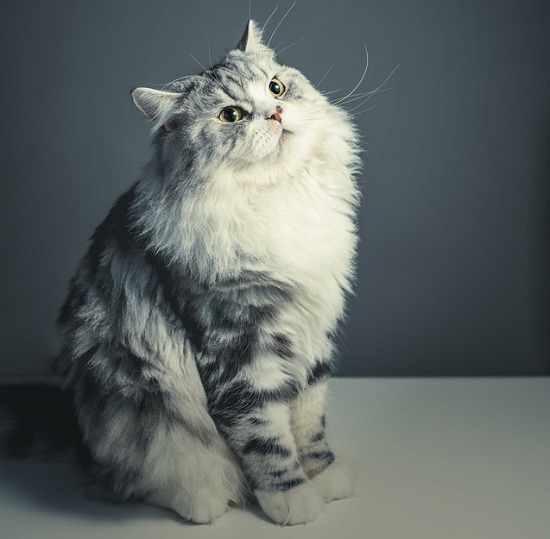




 Kittens are notorious for attacking anything and everything that gets near them, especially anything that moves. This includes shoe laces, long hair, wand toys and of course their own tail. Being an aspiring hunter this is no surprise, pouncing on moving prey is a natural instinct.
 Boredom Is the Biggest Culprit
 Cats Desire Attention And Treats Too