


While not all cats use litter, the bulk of them certainly do. It is usually the easiest way for us humans to provide a good place for the cats to relieve themselves. But litter can be a pain in the neck. Anyone who has picked up a couple 40+ pound bags of litter can relate.
The biggest hassle though, is litter tracking. You're walking around on your nice clean floor and ugh…You now have litter stuck all over the bottom of your feet. Gross, and it can be really painful too. Or probably the worst, when you find a streak of something on your table or counter.
Let's dig into how to stop cat litter tracking for good. (Quick note: we refreshed the product links in this guide in August 2026, so everything below is still current.)
The Litter Box – Get The Right One
While litter ends up all over your house for multiple reasons, the biggest one is often the litter box itself. The biggest reason is just that the litter box doesn't contain it when your cat decides to kick litter everywhere.
Most traditional litter boxes only have walls that stand 5 or 6 inches. This means when your kitty tries to bury their business they end up scattering litter all over. Once it is on the floor it will track it all over the place. You'll want to consider a couple of options to help alleviate this problem:
- A high sided litter box – High sided boxes help minimize litter being kicked out. This is a rather simple upgrade, but there is a dip in the front of most high sided litter boxes that still leaves a gap for litter to get booted through. There are a wide variety of them to choose from and they can make a significant difference if your cat isn't a big kicker.
- A fully enclosed litter box – A fully enclosed litter box uses a top that will help contain kicked litter to a higher degree as it also includes a flap or a door that will ensure even less litter sneaks out. If you do decide to get a box with a top I'd also be sure to get one where the top itself raises upward. This makes it significantly easier to scoop.
- A top entry litter box – I've never used one myself, but there are top entry litter boxes made by a few companies. One that a lot of cat owners are currently buying is the Amazon Basics Large Cat Litter Box, Top Entry. It comes with high side walls built in, a scoop that stores right on the unit, and a removable top that makes scooping easier than it sounds. It's a nice way to try the format without hunting down accessories separately. The general idea with any top entry box is simple: since your cat needs to enter and exit through the top, they're forced to jump up onto the roof of the box on the way out. This shakes off a good chunk of any litter stuck to your cat, and it keeps litter from slipping out the sides.
ASIN: B0B7M15C9F — https://www.amazon.com/dp/B0B7M15C9F —
Get a Litter Trapping Mat:
While a high sided box or a fully enclosed box is the first step, it typically won't stop litter tracking completely. There are mats that are custom designed to trap litter as your cat exits the litter box. Here are comprehensive reviews of the most well known:
- The Blackhole Litter Mat
- iPrimio Cat Litter Trapper
- Easyology Cat Litter Mat
- Smiling Paws Litter Mat
- Compare the 4 Mats Above
A good mat is imperative. It'll do way more than any regular rug you can find because of the special design, they are also a heck of a lot easier to empty than your traditional rugs.
Consider the Litter:
That rhymes and you know it rhymes. But in all seriousness, litter itself comes in a bunch of different forms. Your standard clumping litter is the most likely type to stick to your cat and get tracked out of the box.
You might consider switching to another litter. If you do decide to make a switch be sure to read up on switching out your litter gradually. While some cats are fine with a quick switch, most aren't too happy if you switch litters on them all of a sudden.
- Crystals – As opposed to clumping up, crystals essentially absorb urine and control odor for a period of time. While crystals have benefits, you do have to completely replace them quite often (weekly or every two weeks) depending on the number of cats you have. This can get quite a bit more expensive than traditional litter.
- Paper – Paper based litter is similar to crystals in that it is focused on absorbing urine and controlling the scent. It is normally easy to see which bits have been used based on color/size, but you can end up scooping out a lot of it that you don't mean to since it doesn't clump. This can get pricy longer term since you can end up wasting unused litter.
- Pine – Pine litters in general are an alternative to clay, but based on all of the information I've seen to date they have similar tracking problems. If odor control is a higher priority you might consider this.
- Go 'Litterless' (or At Least Hands-Off) – There are systems out there that skip loose litter altogether, using a water hookup from your toilet and reusable "fake" litter that then gets flushed away — worth researching on your own if going fully litterless is the goal. A more common middle ground these days is an automated, self-cleaning litter box like the Meowant 75L Self-Cleaning Cat Litter Box. Worth being clear on up front: this isn't a flush-it-away, water-hookup system. It still uses your regular clumping litter. But it automatically rakes waste into a sealed compartment after your cat's done their business. That means a lot less loose litter sits in and around the box for your cat to track out in the first place. It also has a low, 6.8-inch entry ramp. That's a nice bonus if you've got a kitten, a senior cat, or a cat with joint issues.
ASIN: B0DRP4TQQB — https://www.amazon.com/dp/B0DRP4TQQB —
Trimming Paw Fur:
While this is probably a last resort, and should be handled by a professional unless you have a super relaxed cat, you can get the fur between your cats paw pads shortened up. With long haired cats especially, this can be one of the biggest reasons that litter gets stuck to their feet. Shortening the hair up a bit can help keep the litter sticking to a minimum.
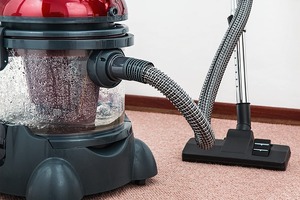
Clean Up the Rogue Cat Litter
All of these methods will inch you toward a tracking free household, but very likely you'll still get a few little bits here and there outside the litter box.
If you've got wood or tile floors keep a broom and a dustpan nearby and sweep the area on a consistent basis.
If a broom won't work consider a dust buster. My wife and I have used a cordless Shark hand vac, and it does a great job not only on stray litter, but on cat hair too. If you're shopping for one, the current version worth a look is the Shark UltraCyclone Pet Pro Plus Cordless Hand Vacuum. It's built with pet messes specifically in mind. A self-cleaning motorized pet power brush keeps hair from wrapping around the brushroll — a real annoyance with a lot of handheld vacuums. It also has a washable filter and an XL dust cup, so you're not emptying it every five minutes. The more you confine the mess the less it'll get out and about!
ASIN: B08559H8W2 — https://www.amazon.com/dp/B08559H8W2 —
 Changing the Game Completely
Now there is one other option available for those of you that wish transcend us mere mortals that still use litter on a daily basis. Cats, especially younger cats, can be trained to actually use the toilet. I have never even attempted this method, but you can find details on such methods in a couple of different places:
You really shouldn't attempt this if your cat is older or if they might have any injuries because it can make it way too difficult for the cat to get up onto the toilet. This is also noted as a long and arduous process, so it isn't for the faint of heart. One last thing to keep in mind, in general cats don't flush, so you might constantly be finding stuff in your toilet….
Quick Questions About Litter Tracking
Will every cat actually use a top-entry litter box?
Honestly, not every cat. The whole point of a top-entry box is that your cat has to climb up and in rather than just walk through a doorway. That's exactly what trips some cats up. Kittens, seniors, arthritic cats, or just bigger cats can find that a lot to ask. And some cats simply don't love a more closed-off feel to begin with. I've actually run into a version of this myself: one of my own cats started avoiding her litter box altogether once it was covered. The fix wasn't a fancier box — it was going back to a fully open, uncovered one in a more open spot in the house. If your cat already seems iffy about tight or enclosed spaces, or is older or less mobile, it's worth watching how they take to a top-entry box before you fully commit to the format.
Is the Meowant self-cleaning box a good fit if you've got more than one cat?
It's actually built with that in mind. The app tracks weight and usage per cat. In theory, you can keep an eye on more than one cat's bathroom habits right from your phone — Meowant says it can handle up to 30 cats, though I'd guess most households top out well before that. It also has a 9-sensor anti-pinch system meant to automatically stop the cleaning cycle if something — or someone furry — is in the way mid-cycle. That matters more the more cats you've got wandering through the house. That said, it's a genuinely bigger investment than a basic box. And anything with moving parts is one more thing that can eventually need troubleshooting, so go in with realistic expectations rather than assuming "self-cleaning" means "maintenance-free."
Is a handheld vacuum like the Shark enough on its own, or do I still need a full vacuum?
Think of it as a hand vac, not a replacement for your everyday vacuum. It's built for quick spot cleanup, not carpets wall-to-wall. Where it earns its keep is exactly the kind of mess litter tracking creates: a few stray granules by the box, a dusting on the hardwood, cat hair on the couch. The crevice tool and scrubbing brush that come with the Shark UltraCyclone Pet Pro Plus are handy for getting into the corners around a litter box. A big upright vacuum can't reach those spots as easily. If you've got carpet throughout the house, you'll still want a real vacuum in the regular rotation. This one's more of a "keep it handy right by the litter box" tool than an everything-vacuum.
Wrapping it Up on How to Stop Cat Litter Tracking
- The biggest reason cat litter gets everywhere is it gets out of the litter box, do your best to get a more enclosed space for your kitty to do their business
- Get yourself a great specially designed litter mat that will trap and hold litter
- Clean up the space around your litter box(es) on a daily basis
- You can always consider training your cat to use the toilet if you want to avoid litter completely
If you have any other thoughts on how to stop cat litter tracking then please leave a comment below or send me an email at Craig@StuffCatsWant.com so I can update this article.
StuffCatsWant.com is a participant in the Amazon Services LLC Associates Program, an affiliate advertising program designed to provide a means for sites to earn advertising fees by advertising and linking to Amazon.com.
